
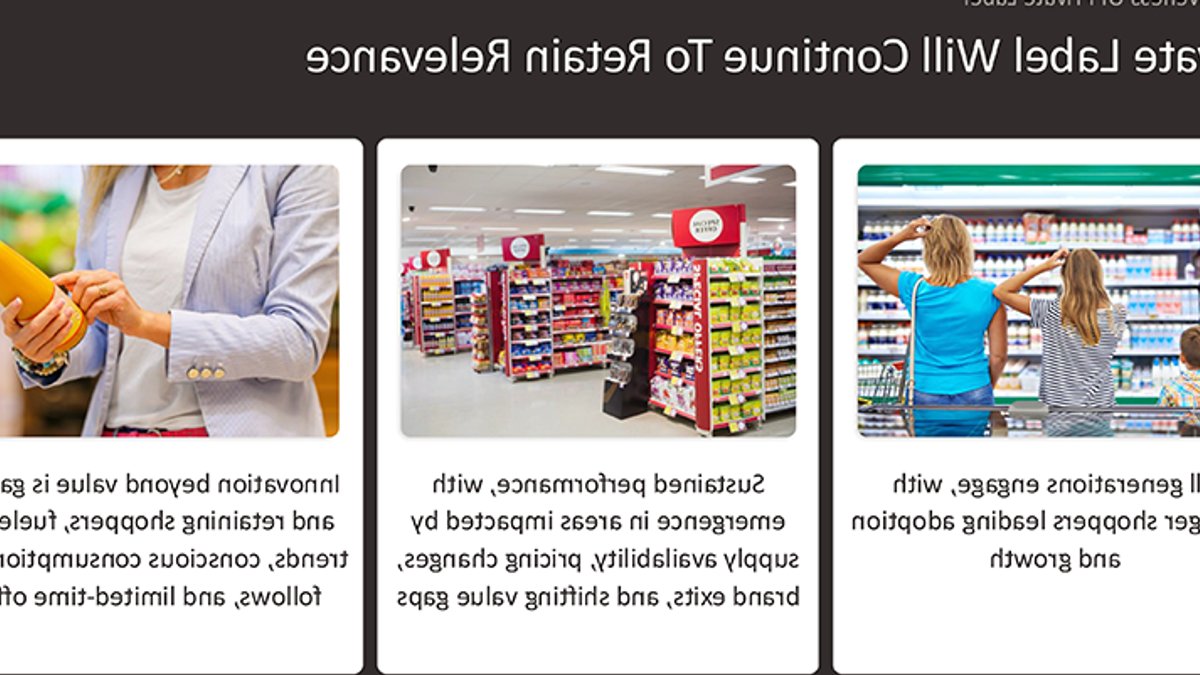
Private label sales in the U.S. hit $251.3 billion for the 52 weeks ending June 14, up from $247.3 billion a year earlier, according to data from Spins. The growth comes from existing customers buying store brands more often, not just new shoppers trying them. This shift suggests private label is becoming a regular part of shopping habits, moving beyond its budget-option reputation.
The data, shared during a recent webinar titled The Attractiveness of Private Label, comes from Spins’ Trilens panel, powered by Circana, along with shopper surveys. It shows how spending habits are changing: more frequent store trips contributed $3.7 billion of the year-over-year increase, while new households adopting private label added $1.5 billion. Spending per trip dropped by $1.2 billion due to fewer units bought and lower prices per item.
Emily Munz, distributor insights manager at Spins, called this shift “important” because it suggests private label is becoming part of shoppers’ regular routines, rather than simply being a trade down option when prices are high.
E-Shaped Economy Drives Private Label Demand
Alex Overstreet, retail insights manager, used an “E-shaped economy” model to frame the trend—an alternative to the traditional “K-shaped” recovery. In this model, higher-income shoppers buy private label for attributes like higher protein or no added sugar, while lower-income shoppers prioritize price. The middle class focuses on premium attributes such as organic or clean ingredients, driving demand for private label options with these features.
Overstreet cited Walmart’s Bettergoods and Great Value lines, along with Kroger’s Simple Truth organic products, as examples of retailers meeting this demand. “These consumers are shopping with intentionality and redefining premium to an attribute profile, not just a price point,” he said of shoppers in the middle and top tiers, pointing to offerings.
Private label’s appeal goes beyond value. In categories like cream cheese, organic private label dollar growth accelerated to 89% over the last 12 weeks even as prices rose. When one national retailer launched a premium private label cream cheese, SPINS saw an immediate on-shelf response from a conventional national brand that had been priced above $7, with all three tiers settling around $4 for an 8-ounce package.
Higher-Income Shoppers Lead Private Label Adoption
Adoption is climbing fastest among higher-income households. In a January SPINS survey, 43% of shoppers earning at least $150,000 said they purchased more private label than in 2024, compared to 37% of those earning $75,000 or more and 25% of those earning less than $75,000. Younger shoppers are leading the charge. Gen Z and Millennials contributed 81% of year-over-year private label dollar gains despite representing 17% of shoppers, with Gen Z private label spending up 31% versus a year ago.
Evonne Chan, senior market insights analyst, said the category has shed its old stigma. “I don’t think anyone’s afraid to say that they shop private label anymore,” she said.
The category now holds a 22% dollar share at $201 billion, with a two-year compound annual growth rate of 3.1%, compared to 1.7% for national brands. Momentum has slowed, however: dollar growth peaked at 6.1% early in 2025 before turning negative in the most recent 12-week period, with about 90% of those losses tied to refrigerated departments such as eggs, cheese, milk, alternative dairy, and creamers.
Refrigerated Categories Boost Private Label Sales
Refrigerated fresh meat, poultry, and seafood led private label gains, with refrigerated beef accounting for nearly $1 billion in sales. Pricing has widened the value gap: private label’s average retail price rose 14 cents in two years to $3.86, while national brands climbed 20 cents to $5—a difference of $1.14—boosting private label’s value proposition by 6%.
Norine Rudnicki, broker insights manager, identified innovation opportunities in categories where young shoppers over-index but private label penetration remains low, including energy drinks, yogurt, and frozen pizza. “The next wave of private label growth may not come from categories where private label is already strong,” she said. “It may come from categories where young shoppers are already showing enthusiasm, and retailers have more room to differentiate through product innovation, trends, premiumization, and unique offerings.”
Retailers Innovate with Private Label Offerings
Retailers are responding to shifting consumer values. Aldi removed 44 ingredients from its private label portfolio, Walmart eliminated synthetic dyes across its private label food brands, and Kroger debuted protein-focused offerings. Erewhon has built a private label vitamins and supplements line that accounts for nearly 30% of its vitamin, mineral, and supplement sales, compared to about 8% across the broader channel. Sprouts launched a private label refrigerated cold brew in January, and Marks & Spencer added over 1,400 new items in 2025.
Limited-time offerings represent a lower-risk path, Rudnicki said, noting 76% of Trader Joe’s shoppers revisit the retailer. “Private label is just no longer a value play,” she said. “It’s becoming a long-term growth driver because it appeals to a broad range of shoppers, continues to perform across changing market conditions, and increases wins through innovation.”


