
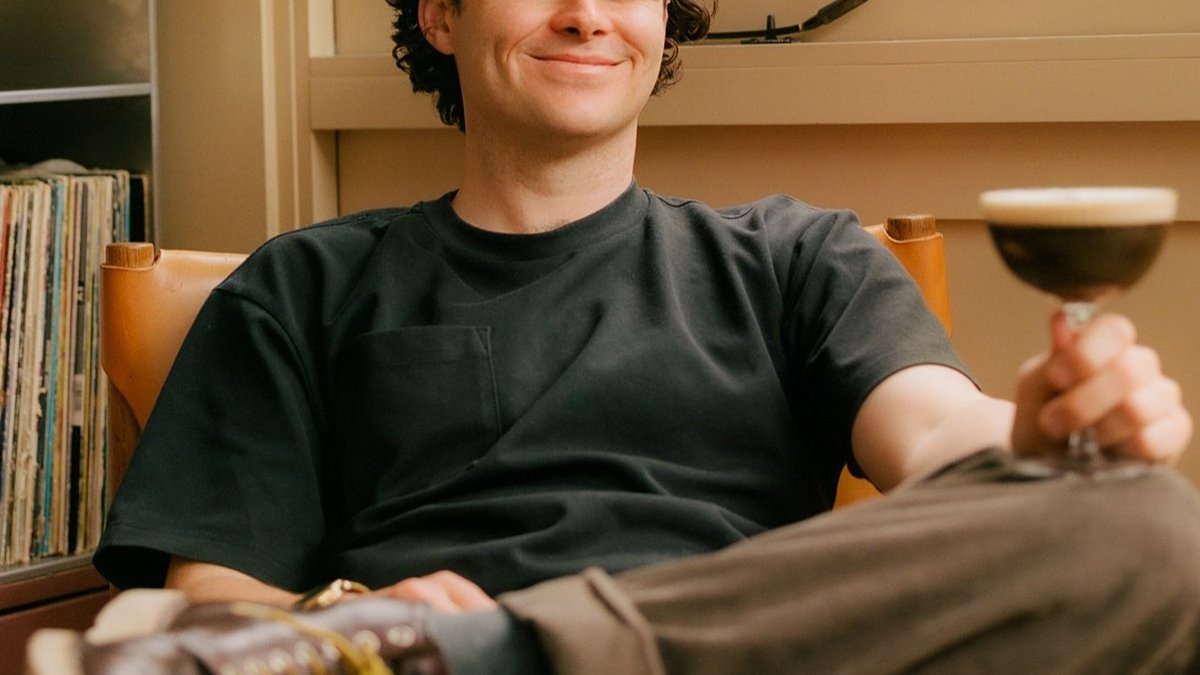
Moth has secured £11 million in funding to expand its grocery and convenience presence in the UK and the US. The Ready-to-drink (RTD) brand, founded by Rob Wallis and Sam Hunt, grew from hand-filled bottles above a pub to a premium drinks business, a transition that still feels surreal to its co-founder.
Wallis insists the business is far from mature in its home market. “With the funding round and with the scale we’re at now, people think we’re sort of reaching maturity in the UK, and I couldn’t disagree more,” he says. “We’ve barely started.”
Wallis recalls the early days of the company. “We did years of no team, no money, no funding, no idea, no cans,” he says. The team simply had to “grit our teeth, do our MBA and make our mistakes.” That Waitrose moment gave the brand credibility in grocery and proved canned cocktails could command a premium if the product justified it.
Related: Jack Daniel’s owner rejects takeover bid
Quality cannot become a casualty of growth and the brand has to be “really product obsessive.” As the company scales, the responsibility that comes with that positioning has only grown. “If you take the risk on us and pay twice as much as you usually do to try your first Moth, it’s got to be spectacular. It’s got to be perfect.”
That means guarding the details: real spirits, real ingredients, batch checks and a refusal to let margin pressure dilute what made the brand work in the first place. “If you’re going to charge more and you are claiming to be worth more, you’ve got to put your money where your mouth is,” he adds.
The next big UK opportunity is convenience. Moth has already established itself in grocery, but Wallis sees convenience as a vast and relatively underdeveloped frontier for the brand. Wallis admits to only starting taking convenience “semi-seriously” for the first time last year. It has quickly led to staggering results.
Moth’s June convenience-channel revenue matched what it had generated across the whole of the previous year. “That as an opportunity is just blown wide open for us.” It is an unusual route. Many challenger brands build distribution in independents and convenience before persuading major supermarkets to take a chance. Moth’s path was effectively the reverse, shaped partly by Covid and partly by the momentum that grocery created.
Related: Meat producers urge government to protect water supply
Convenience also changes how the brand sells. Grocery is about central buying relationships and national rollouts. Convenience is more fragmented, more local and more dependent on people on the ground. For Moth, those shop owners are not simply stockists. Wallis sees them as advocates capable of influencing purchase at precisely the moment a shopper is deciding what to drink.
Wallis suggests that RTD is the third most impulse purchase in convenience, only behind bottled water and sandwiches. Moth’s proposition is therefore designed not just to be a premium cocktail in a can, but a premium cocktail that is chilled, immediate and easy to consume. “The idea that you could have a Negroni as an incredible bar-serve Negroni just round the corner from your house in 30 seconds, just to open, should not be possible,” Wallis says. “It gives me so much joy that you can just pop into an off-license and have a Negroni better than the Ritz.”
Convenience also demands energy. Wallis says Moth has built a field sales approach that relies on personal relationships, rapid feedback, store visits and event-linked campaigns – most recently a Wimbledon “perfect serve” activation. “It’s so quick moving compared to grocery,” he says. “It’s people intensive and it’s so relationship based.”
The UK market is a priority for the company, despite its expansion into the United States. Moth has already entered states including California, Florida and Illinois, with retailers such as Whole Foods Market, Target and Trader Joe’s offering early proof points for the brand. But Wallis rejects the idea that America can be approached as a simple copy-and-paste expansion. “On a brand level, the brand really resonates over there, which is awesome,” he says. “But we have to say different things.”
Related: Dimbleby startup reveals grocery store survivors
One example is ingredients. In the UK, talking about real lime juice is expected. In the US, Wallis says, it becomes a genuine differentiator. “In the UK it’s not a big deal, it’s just: ‘well, what else would you use?’. In the US, they’re like: ‘Oh my god, real limes.’” The purchase format is different too. UK shoppers may try a single can in Waitrose or Sainsbury’s. US shoppers are more likely to buy four-packs for hosting, stocking the fridge or taking to a gathering.
The drinking culture has almost no similarities between the UK and the US, according to Wallis. You’d be more helpful thinking about it as Brazil is where you’re launching. They happen to speak the same language, but the cultural context is distinct. In the US, a margarita on a Tuesday can still feel like a statement. In the US, Wallis says, it can be as normal as ordering wine or beer.
Wallis believes the brand can succeed in the US because the demand for quality is high. “In the US, you’re probably going to have a margarita,” he says. “We just think you should have a really good one.”


