
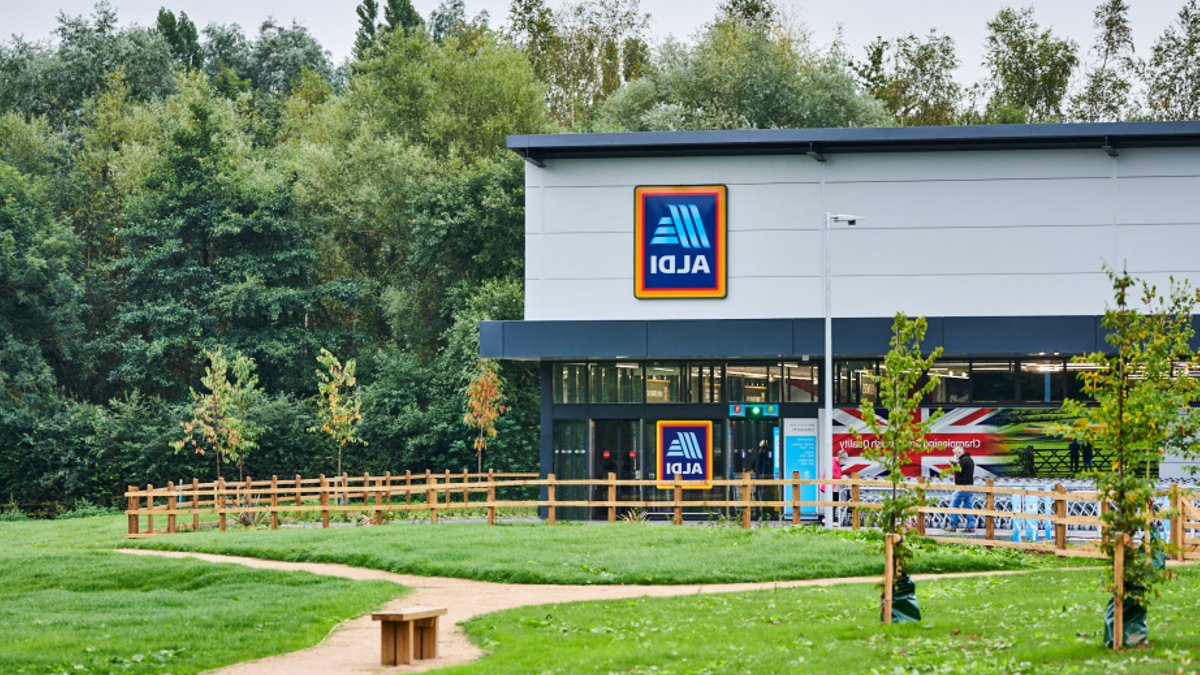
Aldi is slashing its product variety across Europe, including the UK, as it seeks to reclaim market share from Lidl amid declining sales momentum. The discount retailer plans to eliminate branded specialty items and redundant products, prioritizing core essentials and its own-label offerings instead.
These adjustments align with Aldi’s broader initiative to enhance its cost leadership position. Research from Which? indicates that Lidl’s average prices exceeded Aldi’s by 1.5% during the three-month span ending in October.
Despite trailing Lidl in growth, Aldi maintains its position as Britain’s top discount supermarket, commanding 10.4% of the grocery market versus Lidl’s 8.6%. Meanwhile, Lidl’s sales surged 6.6%, reaching £3 billion, in the 12 weeks through November 1, while Aldi’s growth remained stagnant at 0.4%, according to Worldpanel by Numerator. During the same period, Lidl captured £23.6 million in net spending from Aldi as shoppers increasingly shifted between the two chains.
Earlier this year, Aldi allocated £100 million to reduce prices on 300 products as part of efforts to appeal to cost-conscious consumers. Yet Lidl has intensified its own value-focused strategy, committing over £400 million to price cuts and promotions across more than 1,200 items in 2024.
Mirko Warschun, a senior partner at Kearney, told the Financial Times that Aldi’s approach involves optimizing its current model rather than overhauling it entirely. He cautioned that expanding product lines could dilute the operational efficiency that underpins its success.
Aldi is adopting a similar minimalist strategy in other European markets, including Italy and Switzerland. In Germany, the company is also trimming its product selection to cut expenses.
The shift coincides with Aldi’s slower pace of store openings. Originally aiming for 1,200 UK locations by 2025, the retailer now operates slightly over 1,000, though it still targets 1,500 long-term. Next year, Aldi plans to invest £900 million in its UK business, including opening roughly 40 new stores.
Both Aldi and Lidl now face stricter regulations on property agreements after the Competition and Markets Authority ruled that they must adhere to the same restrictions as major supermarkets. This limits their ability to use land deals to block competitors from setting up nearby.


